
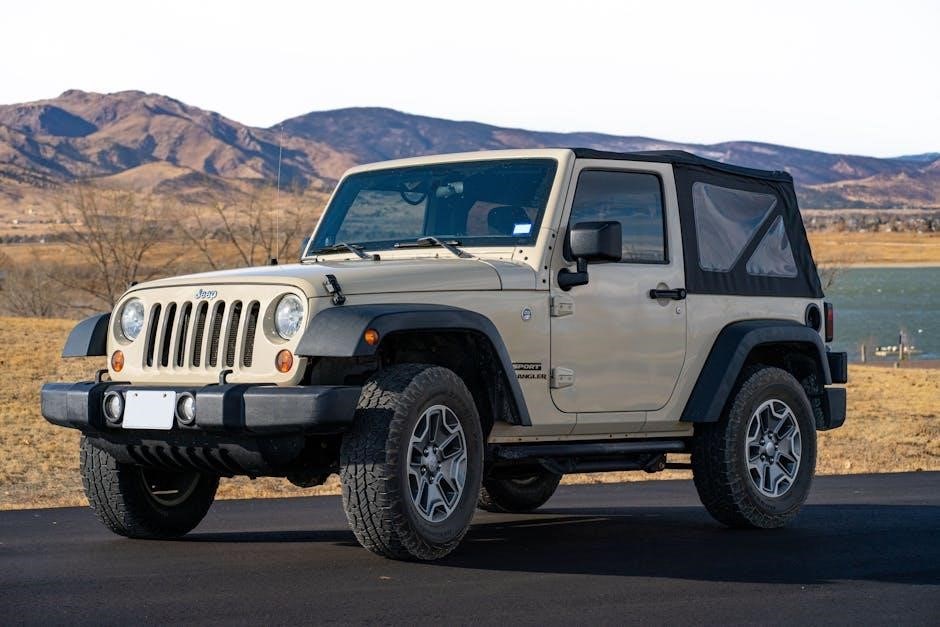
Flat towing a Jeep Wrangler with a manual transmission offers versatility for adventurers. This method allows you to bring your Wrangler along behind an RV or another vehicle‚ expanding travel possibilities.
Understanding the Basics of Flat Towing
Flat towing‚ also known as dinghy towing‚ involves pulling a vehicle behind a larger one with all four wheels on the ground. Unlike trailer towing‚ it requires specific preparation of the towed vehicle – in this case‚ a Jeep Wrangler with a manual transmission – to ensure safe and reliable operation. Key considerations include ensuring the transmission is in neutral and the steering is unlocked‚ preventing damage to the drivetrain.
Properly equipped‚ a Wrangler can be safely flat towed for extended distances. This method avoids the complexities of trailer towing‚ like weight restrictions and specialized hitches. However‚ it necessitates a compatible tow bar‚ safety cables‚ and often a supplemental braking system to maintain control and comply with legal requirements. Understanding these fundamentals is crucial before attempting to flat tow your Wrangler.
Why a Manual Transmission Wrangler is Ideal for Flat Towing
A Jeep Wrangler equipped with a manual transmission is particularly well-suited for flat towing due to its inherent design. Unlike automatics‚ manual transmissions don’t require a driveshaft disconnect or transmission pump operation during towing‚ simplifying the process and reducing potential damage. The driver can easily place the transmission in neutral‚ allowing the wheels to rotate freely without stressing internal components.
This simplicity translates to lower equipment costs‚ as a transmission cooler isn’t typically needed. Furthermore‚ manual Wranglers often have more robust transfer cases‚ better suited for the stresses of being towed. This makes them a preferred choice for those seeking a reliable and straightforward flat towing experience‚ offering peace of mind on long journeys.
Essential Equipment for Flat Towing
Successful flat towing requires specific gear: a tow bar‚ safety cables‚ a supplemental braking system‚ and wiring for lights‚ ensuring both safety and legal compliance.
Tow Bar Selection: Choosing the Right Type
Selecting the correct tow bar is paramount for safely flat towing your Jeep Wrangler. Several types are available‚ each with unique features and compatibility considerations. Fixed-arm tow bars remain in a set position‚ offering simplicity‚ while adjustable models allow for varying vehicle distances. Weight capacity is crucial; ensure the tow bar’s rating exceeds the Wrangler’s weight.
Demco and Roadmaster are reputable brands known for quality and Wrangler-specific designs. Consider a tow bar specifically engineered for the JK or JL Wrangler‚ as these often integrate seamlessly with factory mounting points. Baseplate installation is usually required‚ providing secure attachment points. Research compatibility with your tow vehicle’s receiver hitch size (2” is common). Prioritize a tow bar that offers smooth‚ controlled steering of the Wrangler‚ enhancing maneuverability and safety during travel.
Safety Chains and Cables: Importance and Proper Connection
Safety chains or cables are a critical‚ often overlooked‚ component of flat towing. They act as a vital backup in the unlikely event of tow bar failure‚ preventing a complete breakaway. Always cross the chains beneath the tow bar‚ forming an “X” shape‚ to provide support if one chain breaks.
Ensure sufficient slack exists to allow for turning‚ but avoid excessive slack that could cause dragging. Securely attach the chains to designated mounting points on both the tow vehicle and the Wrangler’s baseplate – never to the bumper! Use properly rated shackles or hooks. Regularly inspect chains for wear‚ corrosion‚ or damage. Proper connection minimizes the risk of damage and ensures the safety of you and other drivers on the road.
Supplemental Braking System: Ensuring Safe Stops
While the Jeep Wrangler’s weight may not necessitate brakes in all locations‚ a supplemental braking system is highly recommended‚ and often legally required‚ for safe and controlled stopping. These systems activate the Wrangler’s brakes in proportion to the tow vehicle’s deceleration‚ reducing stopping distances and minimizing stress on the tow vehicle’s brakes.
Several types are available‚ including proportional systems that mimic the tow vehicle’s braking and static systems that apply brakes after a set deceleration rate. Proper installation and adjustment are crucial for optimal performance. Regularly test the system before and during travel. Investing in a quality supplemental braking system significantly enhances safety and provides peace of mind while flat towing your Wrangler.
Wiring for Turn Signals‚ Brake Lights‚ and Running Lights
Proper wiring is essential for safe flat towing‚ ensuring the Jeep Wrangler’s lights function in sync with the tow vehicle. A dedicated wiring harness‚ often a seven-pin connector‚ is required to transmit signals for turn signals‚ brake lights‚ and running lights; This prevents confusion for other drivers and ensures legal compliance.

The harness connects to the Wrangler’s tail light assembly and the tow vehicle’s connector. Carefully follow the manufacturer’s instructions for installation‚ ensuring secure connections and proper grounding. Regularly inspect the wiring for damage or corrosion. Utilizing a diode system prevents electrical feedback between vehicles‚ safeguarding both electrical systems during the towing process.
Preparing Your Jeep Wrangler for Flat Towing
Before towing‚ ensure the Wrangler is properly prepped: transmission in neutral‚ steering unlocked‚ and driveshaft disconnected if necessary for a smooth‚ safe tow.
Transmission Preparation: Neutral Position and Key Switch
Proper transmission preparation is paramount for safe flat towing of your manual transmission Jeep Wrangler. Always ensure the transmission is fully in the neutral position. Double-check this by attempting to move the vehicle by hand – it should roll freely.
Next‚ the key switch position is crucial. The steering wheel will remain unlocked‚ but the ignition switch should be in the “ON” or “RUN” position. This allows the Wrangler’s steering to function correctly and prevents locking‚ which could create a dangerous situation while towing.
Leaving the key in the “ON” position also powers essential systems like the brake lights and turn signals‚ assuming you have the appropriate wiring connected (discussed later). Confirm the key is securely in the “ON” position before commencing the towing process‚ and periodically verify it remains there during your journey.
Steering Wheel Disconnect: Ensuring Free Steering
For safe flat towing‚ disconnecting the steering wheel on a Jeep Wrangler is often necessary‚ particularly with certain model years. This prevents binding and potential damage to the steering system of either the Wrangler or the tow vehicle. A steering wheel disconnect kit is typically required‚ allowing the steering column to be separated.
After disconnecting‚ the steering wheel should rotate freely. Verify this by gently turning the wheel – it shouldn’t offer resistance. Remember that disconnecting the steering means you’ll lose power steering assistance in the Wrangler.
Always follow the manufacturer’s instructions for your specific disconnect kit. Reconnecting the steering wheel is equally important and must be done correctly before driving the Wrangler under its own power again. Failure to do so will render the steering inoperable.
Disconnecting the Driveshaft (If Required)
Depending on your Jeep Wrangler’s model year and drivetrain configuration‚ disconnecting the driveshaft may be crucial for flat towing. This prevents wear and tear on the transfer case and other components caused by the rotation of the driveshaft while the vehicle is being towed. Consult your owner’s manual to determine if driveshaft disconnection is necessary for your specific Wrangler.
If required‚ a driveshaft disconnect kit is typically used. This involves removing the driveshaft at the transfer case or differential. Ensure the disconnected driveshaft is securely supported to prevent it from dragging or causing damage during transport.
Properly reinstalling the driveshaft before driving the Wrangler under its own power is vital. Always follow the kit’s instructions and torque specifications.

The Flat Towing Process: Step-by-Step Guide
Begin by carefully connecting the tow bar to both the Jeep Wrangler and the tow vehicle‚ ensuring secure attachment. Double-check all connections before starting your journey.
Connecting the Tow Bar to the Wrangler
Attaching the tow bar to your Jeep Wrangler requires precision and adherence to the manufacturer’s instructions for both the tow bar and the Wrangler. Typically‚ this involves securing the tow bar brackets to designated mounting points on the Wrangler’s frame – often utilizing the factory tow hooks. Ensure these mounting points are robust and free from corrosion.
Carefully align the tow bar arms with the Wrangler’s brackets‚ and insert the connecting pins; Always use the provided safety clips or locking mechanisms to prevent accidental disconnection. Verify that all pins are fully engaged and secured. Before proceeding‚ gently test the connection by applying slight tension to confirm stability. A loose connection can lead to serious safety hazards during towing.
Connecting the Tow Bar to the Tow Vehicle
Once the tow bar is securely attached to the Jeep Wrangler‚ the next step is connecting it to the tow vehicle. This usually involves a receiver hitch installed on the tow vehicle. Carefully align the tow bar’s tongue with the receiver hitch opening‚ ensuring it’s level and properly positioned.
Insert the tow bar’s shank into the receiver hitch and secure it with the appropriate hitch pin and clip. Double-check that the pin is fully engaged and the clip is locked. Some tow bars require additional securing mechanisms‚ so consult the manufacturer’s instructions. Gently test the connection by attempting to move the tow bar up and down and side to side to confirm a snug fit before driving.
Verifying All Connections Before Departure
Before embarking on your journey‚ a thorough verification of all connections is paramount for safety. Begin by re-checking the hitch pin and clip on both the Jeep Wrangler and the tow vehicle’s receiver hitch‚ ensuring they are securely fastened. Inspect the safety chains or cables‚ confirming they are crossed and have appropriate slack‚ preventing dragging.
Next‚ verify the electrical connections for turn signals‚ brake lights‚ and running lights are functioning correctly on the towed Wrangler. Walk around both vehicles‚ visually inspecting all connections for any signs of looseness or damage. Finally‚ perform a short test drive at a very low speed to confirm everything operates as expected before hitting the open road.

Safety Considerations During Flat Towing
Maintaining reduced speeds and increased following distances are crucial when flat towing. Regularly monitor the Wrangler via mirrors‚ and be prepared for emergency stops.
Speed Limits and Safe Following Distance
When flat towing your Jeep Wrangler‚ adhering to safe speed limits is paramount; Generally‚ a maximum speed of 65 mph is recommended‚ though some states may have lower restrictions specifically for towed vehicles. Always check and comply with the laws of each state you travel through.
Maintaining a significantly increased following distance compared to normal driving is also essential; A minimum of 300 feet between your tow vehicle and the vehicle ahead provides ample reaction time. Remember‚ the Wrangler’s braking system is supplemental‚ and stopping distances will be longer.
Avoid sudden maneuvers or abrupt braking. Smooth‚ gradual changes in speed are key to maintaining control and preventing instability. Be particularly cautious on downhill grades‚ as the towed vehicle can gain momentum quickly. Prioritize a consistent‚ controlled pace throughout your journey.
Monitoring the Towed Vehicle
Consistent monitoring of your flat-towed Jeep Wrangler is crucial for a safe journey. Regularly check your mirrors – and ideally‚ utilize an auxiliary camera system – to observe the Wrangler’s position and ensure it’s tracking correctly behind the tow vehicle. Look for any unusual movements‚ swaying‚ or drifting‚ which could indicate a problem with the tow bar or supplemental braking system.
Pay attention to any sounds coming from the Wrangler. Unusual noises‚ like clunking or grinding‚ could signal a loose connection or mechanical issue. Periodically‚ safely pull over and visually inspect the tow bar‚ safety chains‚ and wiring connections.
Also‚ monitor the supplemental braking system’s indicator lights to confirm it’s functioning as intended. Proactive observation can help identify and address potential issues before they escalate into serious problems.
Emergency Procedures: What to Do if Something Goes Wrong
Should an issue arise while flat towing your Jeep Wrangler‚ prioritize safety. If the Wrangler begins to sway violently or disconnects‚ immediately and safely reduce speed. Activate your hazard lights to alert surrounding traffic.
Pull over to a secure location‚ away from the roadway‚ as soon as possible. Before exiting the tow vehicle‚ assess the situation – is the Wrangler still attached? Are there any obvious mechanical failures? If the supplemental braking system malfunctions‚ be prepared for increased stopping distances.
If you’re unable to resolve the issue yourself‚ contact roadside assistance or a qualified towing professional. Never attempt to continue towing if you suspect a significant mechanical problem. Prioritize getting both vehicles to a safe location for repair.

Legal Requirements and Regulations
Flat towing laws vary by state‚ necessitating research before travel. Confirm documentation needs‚ speed limits‚ and braking system requirements for safe and legal towing.
State-Specific Flat Towing Laws
Navigating flat towing regulations demands a state-by-state approach‚ as requirements differ significantly. Some states mandate supplemental braking systems on towed vehicles exceeding a certain weight‚ while others have specific stipulations regarding the length of the towing combination. It’s crucial to investigate if your destination state requires a separate endorsement on your driver’s license for flat towing.
Furthermore‚ certain states may restrict flat towing during specific hours or on particular roadways. Always verify if a state requires the towed vehicle to be registered and insured independently. Ignoring these regulations can lead to fines or legal complications. Resources like state transportation departments and RV-specific websites provide detailed information on current flat towing laws‚ ensuring compliance and a worry-free journey.
Required Documentation and Permits
Before embarking on a flat towing adventure‚ gather essential documentation. This typically includes your driver’s license‚ vehicle registration for both the towing and towed vehicles‚ and proof of insurance for each. Depending on the states you’ll be traversing‚ permits might be necessary‚ particularly for exceeding maximum vehicle length limits or weight restrictions.
Check if your route requires special permits for oversized loads‚ even if the combination falls within standard limits. Keep copies of all relevant documents readily accessible during travel. Having these readily available can streamline interactions with law enforcement and prevent potential delays. Thorough preparation ensures a legally compliant and stress-free flat towing experience.