

ReliOn blood pressure monitors offer convenient home health monitoring, but understanding the instruction manual is vital for accurate readings and proper device operation.
Finding the correct manual, often downloadable as a PDF, ensures users can effectively utilize features like automatic inflation and interpret displayed data correctly.
What is a ReliOn Blood Pressure Monitor?
ReliOn blood pressure monitors are digital devices designed for convenient and accurate home blood pressure measurement. These monitors utilize the oscillometric method, eliminating the need for a stethoscope, making them user-friendly for individuals of all ages.
Various models exist, such as the BP200, BP300W, and HEM-741CRELN4, each offering features like automatic inflation/deflation and clear digital displays. Many newer models include voice guidance and large backlit LCD screens for enhanced usability. Accessing the correct instruction manual is crucial for understanding your specific model’s functionalities.
Importance of Reading the Instruction Manual
The instruction manual is paramount for optimal ReliOn blood pressure monitor use. It details proper cuff placement, ensuring accurate readings, and explains the meaning of displayed error codes. Understanding the oscillometric measurement method, as described in the manual, is key to interpreting results correctly.
Furthermore, the manual outlines safety precautions, contraindications, and warranty information. Ignoring these instructions can lead to inaccurate measurements, device malfunction, or even potential health risks. Always refer to your specific model’s manual before operation.

Understanding Your Monitor Model
ReliOn offers various blood pressure monitor models (BP200, BP300W, HEM-741CRELN4). Identifying your specific model number is the first step to finding the correct instruction manual.
Identifying Your Specific ReliOn Model Number (e.g., BP200, BP300W, HEM-741CRELN4)
Locating your ReliOn blood pressure monitor’s model number is essential for accessing the correct instruction manual and support resources. This number is typically found on a label located on the back or bottom of the monitor unit itself.
Common ReliOn model numbers include BP200, BP300W, and HEM-741CRELN4, but variations exist. Carefully examine the device for a series of letters and numbers – this is your unique identifier. Having this number readily available streamlines the manual download process.
Where to Download the Manual (ManualsLib and other resources)
Several online resources offer downloadable ReliOn blood pressure monitor manuals in PDF format. ManualsLib is a frequently recommended starting point, providing an extensive digital library of user guides. Simply search using your specific model number to locate the corresponding instruction manual.
Additional websites may also host these manuals; a broader internet search can uncover further options. Ensure the downloaded manual matches your exact model for accurate guidance.
Components of the ReliOn Blood Pressure Monitor
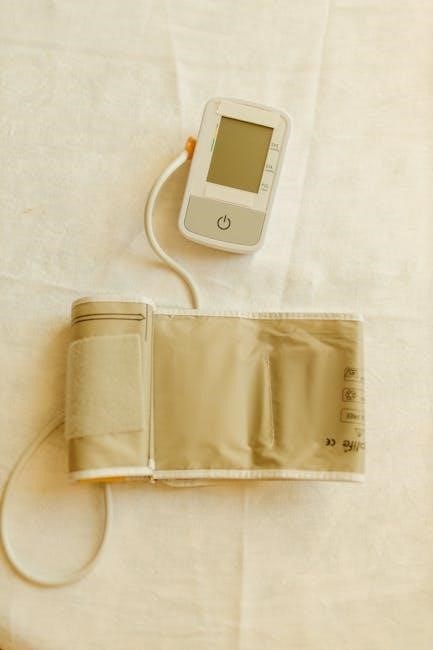
ReliOn monitors typically include a cuff, monitor unit with a display panel, and a power source—batteries or an adapter—for measuring blood pressure.
Cuff and its Proper Size
The cuff is a critical component, directly impacting measurement accuracy. ReliOn instruction manuals emphasize selecting the correct cuff size based on your arm circumference. Using an improperly sized cuff—too small or too large—can lead to inaccurate blood pressure readings.
Measure your arm’s circumference to determine the appropriate cuff size. Most ReliOn monitors come with a standard cuff, but larger or smaller sizes may be needed. Refer to your manual for specific sizing guidelines and ensure a snug, but not overly tight, fit during measurement.
Monitor Unit and Display Panel
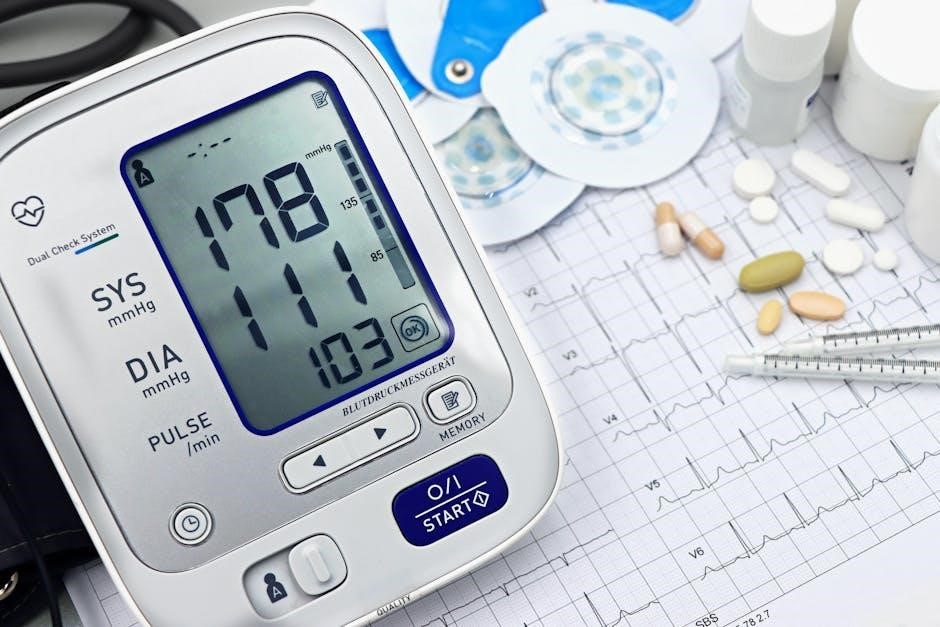
The ReliOn monitor unit houses the electronic components and features a digital display panel. Instruction manuals detail the functions of each button and the information presented on the screen. Expect to see readings for systolic and diastolic pressure, as well as pulse rate.
Many ReliOn models boast a large, backlit LCD screen for clear visibility, even in low light. Some advanced models include voice guidance, verbally announcing the readings. Familiarize yourself with the display’s symbols and error codes as explained in your manual.
Power Source (Batteries or Adapter)
ReliOn blood pressure monitors typically operate using batteries, though some models may also support an AC adapter. Your instruction manual will specify the required battery type and quantity. Always install batteries correctly, observing the polarity markings.
Regular battery replacement is crucial for accurate measurements. The manual will also detail if an optional adapter is available and its specifications. Low battery indicators on the display signal the need for replacement, ensuring continuous monitoring capability.
Setting Up Your Monitor
ReliOn monitor setup involves installing batteries and setting the correct date and time, as detailed in the instruction manual, for accurate data tracking.
Installing Batteries
ReliOn blood pressure monitors typically require standard batteries for operation; consult your instruction manual for the correct type and quantity needed. Ensure proper battery polarity (+ and -) when inserting them into the battery compartment.
Incorrect installation can prevent the monitor from powering on or lead to inaccurate readings. Replace batteries when the low battery indicator appears on the display panel, as outlined in the manual, to maintain consistent performance. Always remove old or depleted batteries promptly.
Setting Date and Time
Accurate date and time settings are crucial for correctly tracking your blood pressure readings over time, as detailed in your ReliOn monitor’s instruction manual. Typically, this involves pressing and holding a “Set” or “Mode” button to enter the setting mode.
Use the arrow buttons to adjust the year, month, day, hour, and minute. Confirm each setting by pressing the “Set” button again. Proper timekeeping ensures accurate data storage and review within the monitor’s memory function.
Taking a Blood Pressure Measurement
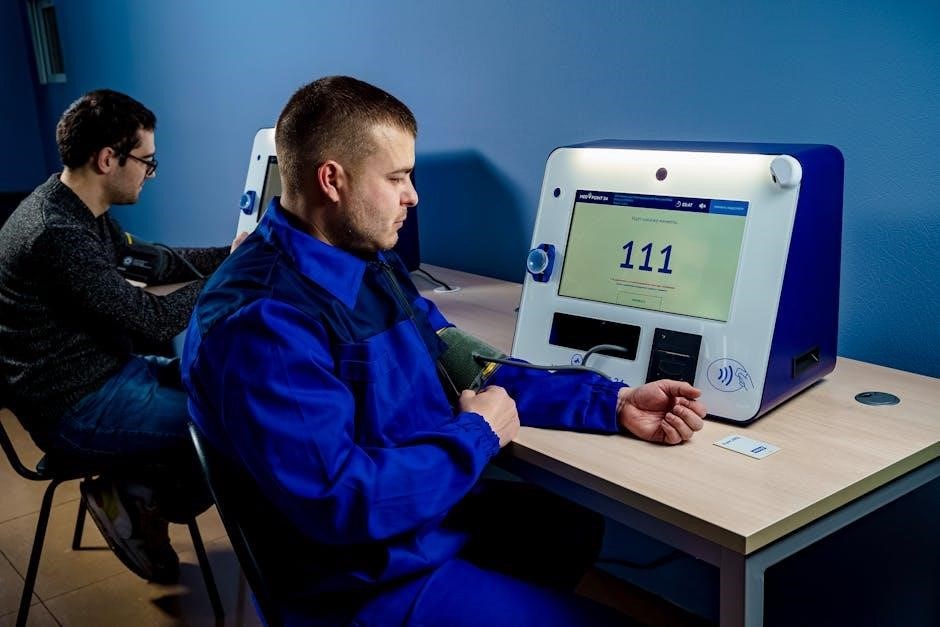
Follow the instruction manual for proper positioning, arm placement, and cuff attachment to ensure accurate readings with your ReliOn blood pressure monitor.
Proper Positioning and Arm Placement
ReliOn blood pressure monitor instruction manuals emphasize correct positioning for accurate results. Sit quietly for five minutes with your back supported and feet flat on the floor.
Support your arm at heart level, ensuring the cuff is placed on your bare upper arm. Avoid talking or moving during measurement. Incorrect positioning can significantly affect readings, leading to inaccurate health assessments. Refer to your specific model’s manual for detailed illustrations and guidance on optimal arm placement.
Attaching the Cuff Correctly
ReliOn blood pressure monitor instruction manuals detail proper cuff attachment. Ensure the cuff is snug, but not too tight, around your upper arm, positioned about one inch above your elbow.
The artery mark on the cuff should align with your brachial artery. Incorrect cuff placement—too loose or tight—can lead to inaccurate readings. Select the correct cuff size for your arm circumference, as specified in your manual, for optimal performance and reliable results.
Starting the Measurement Process
Your ReliOn blood pressure monitor instruction manual will guide you through initiating a measurement. Typically, pressing the “Start” button activates the automatic inflation and deflation sequence.
Remain still and quiet during the process. Some models offer voice guidance, announcing the start and completion of the measurement. Avoid talking or moving your arm while the cuff inflates and deflates to ensure accurate readings. Review your manual for specific button functions.
Understanding the Display Readings
The instruction manual details interpreting systolic and diastolic pressure, pulse rate, and potential error codes displayed on your ReliOn monitor’s digital panel.
Systolic and Diastolic Pressure
Your ReliOn blood pressure monitor displays two numbers: systolic and diastolic pressure. The instruction manual explains that systolic pressure, the top number, measures force when your heart beats.
Diastolic pressure, the bottom number, measures force between beats. Understanding these values, as outlined in your manual, is crucial for assessing cardiovascular health. Normal ranges are typically around 120/80 mmHg, but individual targets may vary; consult your doctor for personalized guidance.
Pulse Rate
Alongside blood pressure, your ReliOn monitor also measures your pulse rate, displayed in beats per minute (BPM). The instruction manual details how this measurement reflects the heart’s contractions.
A normal resting pulse rate generally falls between 60-100 BPM, though this can vary based on fitness level and other factors. Regularly monitoring your pulse, alongside blood pressure, provides a more comprehensive view of your cardiovascular health, as explained within the manual.
Error Codes and Their Meanings
Your ReliOn blood pressure monitor’s instruction manual dedicates a section to interpreting error codes displayed on the screen. These codes signal potential issues during measurement, like cuff errors or movement interference.
Understanding these codes – often represented by letters or numbers – is crucial for troubleshooting. The manual provides specific solutions for each error, guiding you to correct the problem and obtain accurate readings. Ignoring error codes can lead to unreliable data.

Features of Specific ReliOn Models
ReliOn blood pressure monitors vary; some offer voice guidance, large backlit LCD screens, and automatic inflation/deflation, as detailed in each instruction manual.
Voice Guidance Feature
ReliOn blood pressure monitors with voice guidance simplify operation, particularly for individuals with visual impairments or those preferring spoken instructions. The instruction manual details how to activate this feature, which verbally guides users through each step of the measurement process.
The monitor clearly announces readings aloud via a built-in speaker, eliminating the need to strain to read the display. This feature enhances accessibility and promotes independent self-monitoring, as described within the specific model’s manual.
Large Backlit LCD Screen
Many ReliOn blood pressure monitors feature a large, backlit LCD screen designed for easy readability. The instruction manual highlights the benefits of this display, especially for users with impaired vision or those measuring in low-light conditions.
Large numbers and clear symbols ensure measurements are easily visible. The backlight illuminates the screen, enhancing contrast and reducing eye strain. Refer to your model’s manual for specific instructions on adjusting brightness or activating the backlight feature.
Automatic Inflation and Deflation
The ReliOn blood pressure monitor simplifies measurement with its automatic inflation and deflation technology, detailed in the instruction manual. This feature eliminates the need for manual pumping, providing a more comfortable and consistent experience.
The manual explains how the monitor automatically inflates the cuff to a pre-set pressure and then slowly deflates, accurately measuring your blood pressure during the process. Always consult the manual for specific guidance on using this function.

Memory Function and Data Review
ReliOn monitors store previous readings for tracking, as explained in the instruction manual; Users can recall and review this data to monitor blood pressure trends.
Storing Previous Readings
The instruction manual details how your ReliOn blood pressure monitor automatically saves readings after each measurement. This allows for convenient tracking of your blood pressure over time. The capacity of the memory varies by model, with some storing dozens of readings, providing a valuable history for you and your healthcare provider.
Refer to your specific manual to understand the exact memory capacity and how the readings are organized within the device. Consistent monitoring and review of stored data can aid in managing your cardiovascular health effectively.
Recalling and Reviewing Data
Your ReliOn blood pressure monitor’s instruction manual explains how to access previously stored readings. Typically, this involves pressing a “Memory” or “Recall” button on the device. The manual will guide you through navigating the stored data, often displaying systolic, diastolic, and pulse rate values.
Some models may allow you to view average readings over a specific period. Regularly reviewing this data helps identify trends and provides valuable information for discussions with your doctor regarding your health management.
Oscillometric Measurement Method
ReliOn monitors utilize the oscillometric method, detecting blood flow through the brachial artery without a stethoscope, as detailed in the instruction manual.
How the Monitor Detects Blood Flow
The ReliOn blood pressure monitor, as explained in the instruction manual, employs the oscillometric method to determine blood pressure. This technique doesn’t rely on listening for Korotkoff sounds with a stethoscope. Instead, the cuff inflates and then gradually deflates, while the monitor detects oscillations – tiny vibrations – in the blood vessel walls.
These oscillations are created by the pulsating blood flow. The monitor’s internal algorithms analyze these oscillations to pinpoint the systolic (highest) and diastolic (lowest) pressure values. This process converts these movements into a digital reading displayed on the device, offering a user-friendly experience.
Advantages of Oscillometric Monitoring
As detailed in the ReliOn blood pressure monitor instruction manual, oscillometric monitoring offers several benefits. It eliminates the need for a trained healthcare professional to listen with a stethoscope, making self-monitoring at home accessible and convenient. This method is generally less sensitive to variations in technique compared to auscultation.
Furthermore, oscillometric monitors are often more comfortable for patients as they avoid the pressure of a stethoscope on the arm. The automated process and digital display contribute to ease of use and accurate, consistent readings for tracking blood pressure trends.
Troubleshooting Common Issues
The ReliOn blood pressure monitor instruction manual details solutions for inaccurate readings, error messages, and power issues, ensuring continued reliable operation.
Inaccurate Readings
ReliOn blood pressure monitor instruction manuals emphasize several factors contributing to inaccurate results. Ensure the correct cuff size is used, as an ill-fitting cuff significantly impacts readings. Proper positioning – seated with feet flat and arm supported at heart level – is crucial.
Avoid caffeine, exercise, and smoking for 30 minutes before measurement. Re-test if the first reading seems unusual, following the manual’s guidance on multiple measurements. If inconsistencies persist, consult your healthcare provider and review the manual for troubleshooting steps.
Error Messages
The ReliOn blood pressure monitor instruction manual details specific error codes displayed on the unit. These codes indicate potential issues, such as movement during measurement or a weak pulse. The manual provides explanations for each code and recommended actions.
Common errors include “Err” indicating a measurement error, prompting a re-test. If errors persist, the manual advises checking battery levels and ensuring proper cuff connection. Consulting the manual is essential for accurate interpretation and resolving these technical indicators.
Monitor Not Turning On
If your ReliOn blood pressure monitor fails to power on, the instruction manual suggests several troubleshooting steps. First, verify battery installation, ensuring correct polarity. Replace batteries with new ones if needed, as low power is a common cause.
The manual also advises checking the adapter connection if applicable. If the issue persists, inspect the battery compartment for corrosion. If problems continue, consult the warranty information or contact customer support for further assistance.
Maintaining Your ReliOn Monitor
ReliOn instruction manuals emphasize regular cleaning with a soft, damp cloth and proper battery replacement to ensure accurate and prolonged monitor functionality.
Cleaning and Storage
ReliOn blood pressure monitor instruction manuals consistently advise gentle cleaning with a slightly damp, soft cloth to maintain accuracy and hygiene. Avoid abrasive cleaners or immersing the monitor in water.
For storage, keep the monitor in a cool, dry place, away from direct sunlight and extreme temperatures. Proper cuff storage—avoiding kinks or sharp bends—is also crucial for longevity. Always refer to your specific model’s manual for detailed guidance on cleaning and storage procedures.
Battery Replacement
ReliOn blood pressure monitor instruction manuals emphasize using the correct battery type, typically AA or AAA, as specified in your model’s documentation. When replacing batteries, always ensure proper polarity alignment (+ and -).
Remove old or depleted batteries promptly to prevent potential damage to the monitor. Dispose of used batteries responsibly, following local regulations. Regularly check battery levels to maintain accurate readings and avoid interruptions during measurements.

Safety Precautions
ReliOn monitor instruction manuals detail contraindications and warnings; consult your doctor before use if you have specific health conditions or concerns.
Always follow cautions regarding proper cuff placement and avoiding measurements on injured arms.
Contraindications for Use
ReliOn blood pressure monitor instruction manuals clearly outline situations where use is not recommended. Individuals with certain medical conditions should exercise caution or avoid self-measurement.
Do not use the monitor if you’ve had a myocardial infarction, arrhythmia, or are experiencing acute vascular issues. Avoid use on limbs with IV lines, dialysis access, or post-mastectomy edema.
Consult your physician before use if pregnant, or if you have significant arm circumference variations, as these can affect accuracy. Always prioritize professional medical advice.
Warnings and Cautions
ReliOn blood pressure monitor instruction manuals emphasize several critical warnings. Do not self-treat based solely on readings; always consult a healthcare professional for diagnosis and treatment.
Avoid excessive tightening of the cuff, which can cause discomfort or impede circulation. Ensure proper cuff size for accurate measurements. Do not disassemble or modify the device.
Keep the monitor dry and away from extreme temperatures. Regularly check battery condition and replace as needed. Misuse can lead to inaccurate results and potentially harmful decisions.
Warranty Information
ReliOn blood pressure monitor instruction manuals detail coverage specifics and claim procedures; retain your purchase receipt for warranty service requests.
Warranty details vary by model, so carefully review your manual for duration and limitations of coverage.
Coverage Details
ReliOn blood pressure monitor warranty coverage, as outlined in the instruction manual, typically protects against defects in materials and workmanship for a specified period from the date of purchase.
This generally includes malfunctions under normal household use, but doesn’t cover damage from misuse, accidents, or unauthorized repairs. The manual will state the exact warranty length – often one or two years – and what components are covered.
It’s crucial to register your product and keep the original proof of purchase to validate any warranty claims.
How to Claim Warranty
To initiate a warranty claim for your ReliOn blood pressure monitor, consult the instruction manual for specific procedures. Generally, this involves contacting Walmart customer service with your model number and proof of purchase.
You may need to provide a description of the defect and potentially return the unit for inspection. The manual details the address for returns and any required authorization numbers.
Keep all documentation related to your claim for tracking purposes.
Frequently Asked Questions (FAQ)
Q: Where can I find my ReliOn monitor’s instruction manual? A: Check ManualsLib or the Walmart website, searching by your specific model number (e.g., BP200, BP300W).
Q: What does an error code mean? A: Refer to the manual for a comprehensive list of error codes and their corresponding solutions.
Q: How do I ensure accurate readings? A: Follow the manual’s guidelines on proper cuff placement and body positioning.